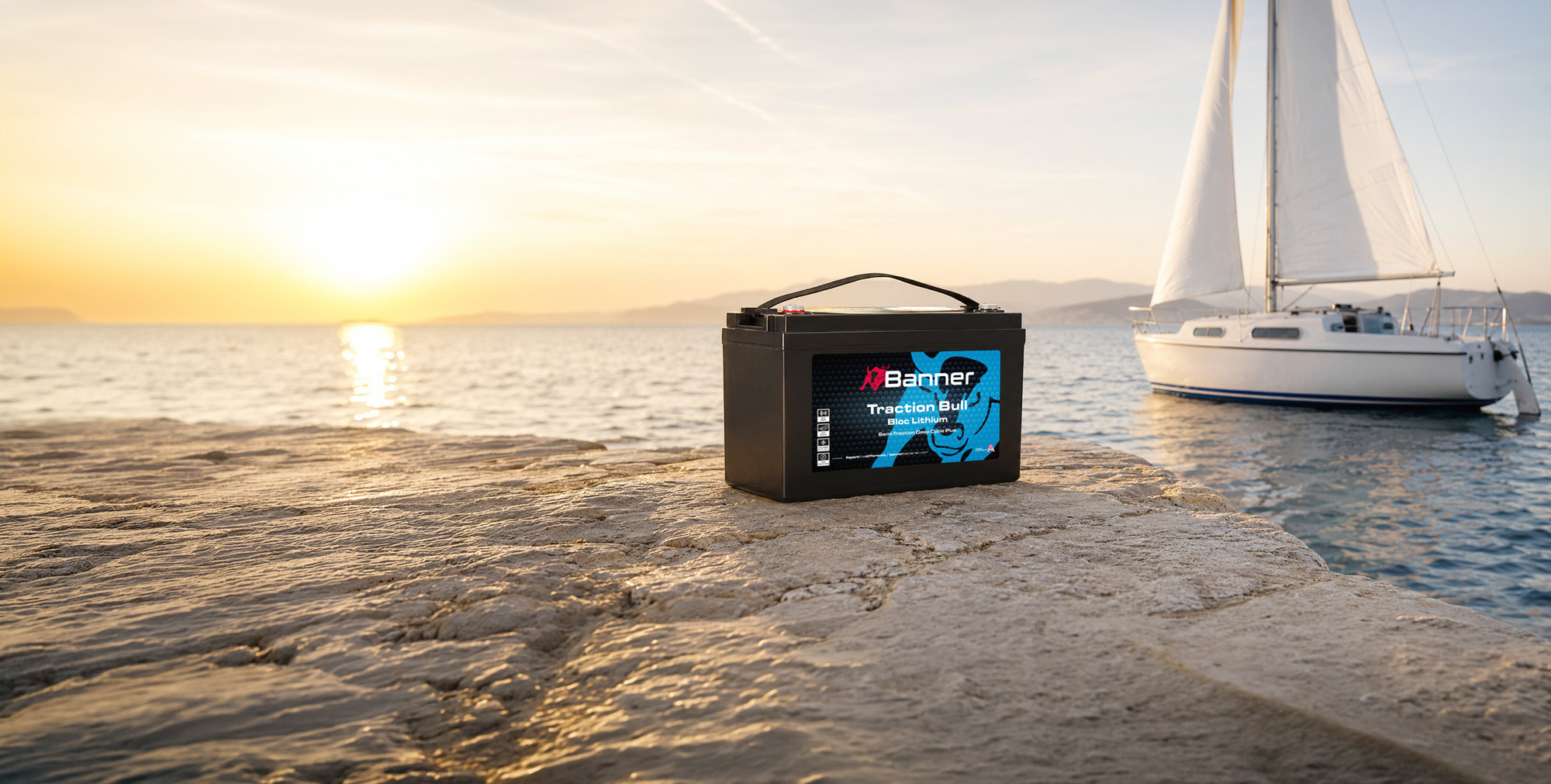
The new Lithium battery.
A class apart.
Boat, Marine applications
Safe starting. Reliable supply.
Safe return.
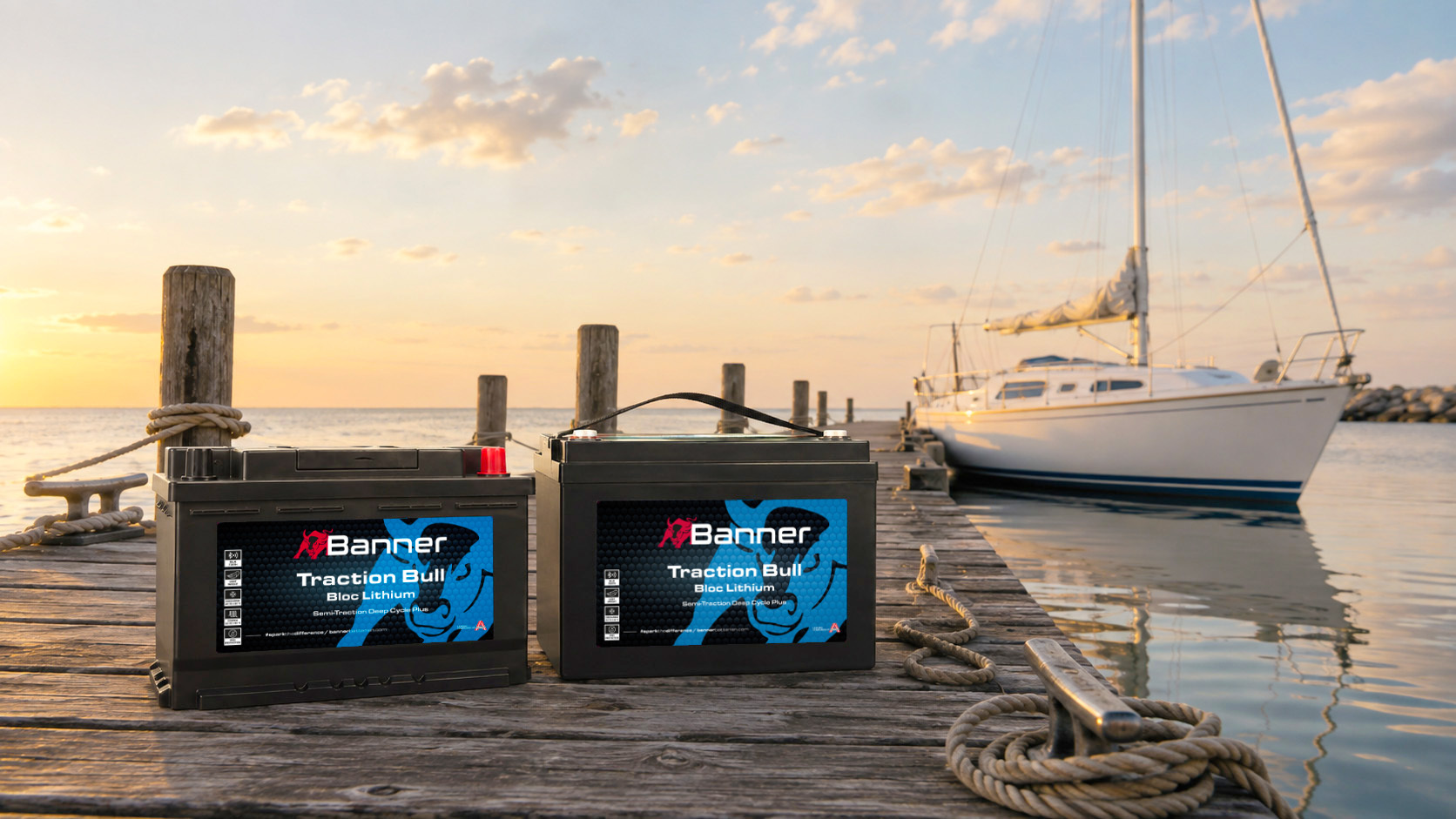
Reliability is essential on the water: The new Banner Traction Bull Bloc Lithium supplies power for starting, navigation, radio and on-board electronics – reliably and without loss of capacity during long periods of inactivity. Plus charging technology, accessories and advice from a single source. This keeps safety as it should be: always on board.
Key benefits
Decisive advantages for your energy supply on and around the water

Reliable on-board power supply
Even when on-board electronics, navigation equipment, radio and comfort consumers are running simultaneously, the battery delivers stable voltage – for every journey and every berth.

Protection against splash water and moisture
IP65 protection reliably safeguards the battery against moisture, splash water, salt spray and harsh conditions in marine environments.

Integrated Battery Management System (BMS)
The integrated Battery Management System continuously monitors voltage, temperature and state of charge – accessible at any time via the app.

Less weight, more reserve
With the same capacity, it weighs only around one third as much as a comparable lead-acid battery – providing additional payload reserves and saving space on board.

Low self-discharge, fast charging times
Short charging times ensure maximum power availability. The low self-discharge keeps the battery ready for use, even after prolonged winter breaks.

High cycle life
At least 5,000 charge cycles at 50% depth of discharge – seven times that of a comparable AGM battery.
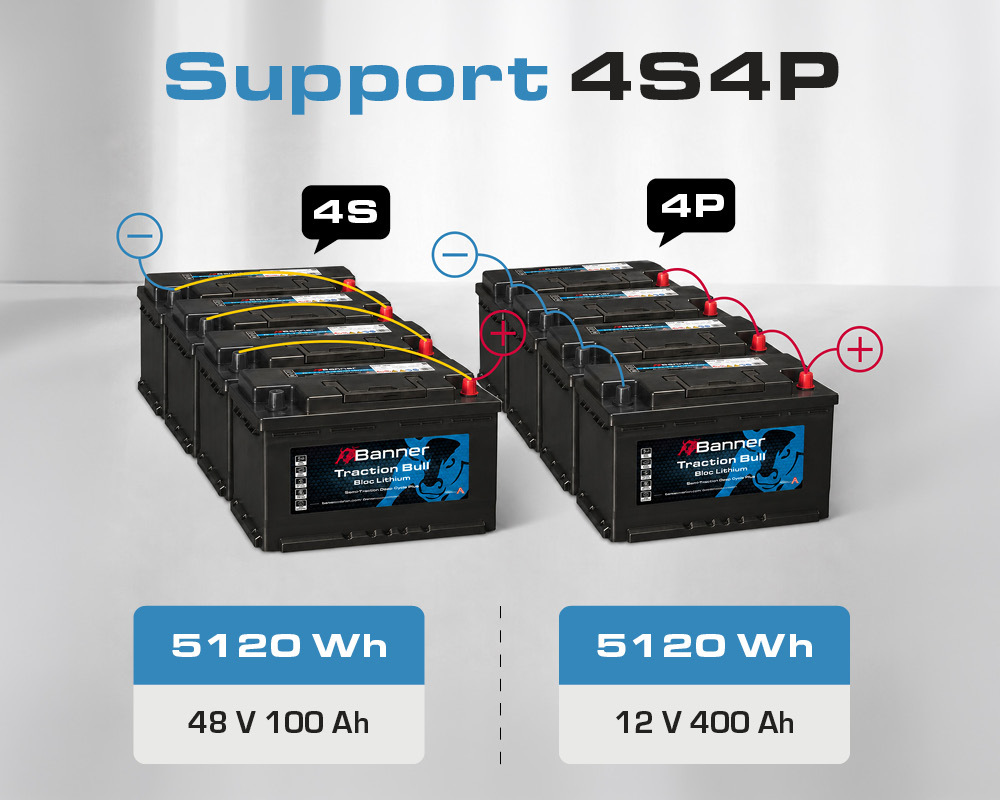
Battery solution tailored to your needs
1–2 × 100 Ah / 12 V: ideal for typical on-board consumers such as navigation, lighting and pumps – compact and reliable for marine use.
2–4 × 100 Ah / 12 V: greater capacity for more extensive on-board electrical systems and longer periods of self-sufficiency suitable for a small refrigerator, electronics, lighting and other consumers.
4 × 150 Ah / 12 V in series (48 V / 150 Ah): perfect for electric propulsion systems and a reliable energy supply for the electric motor, with high energy reserves for longer operating times.
Charge on the go –
wherever and however you travel
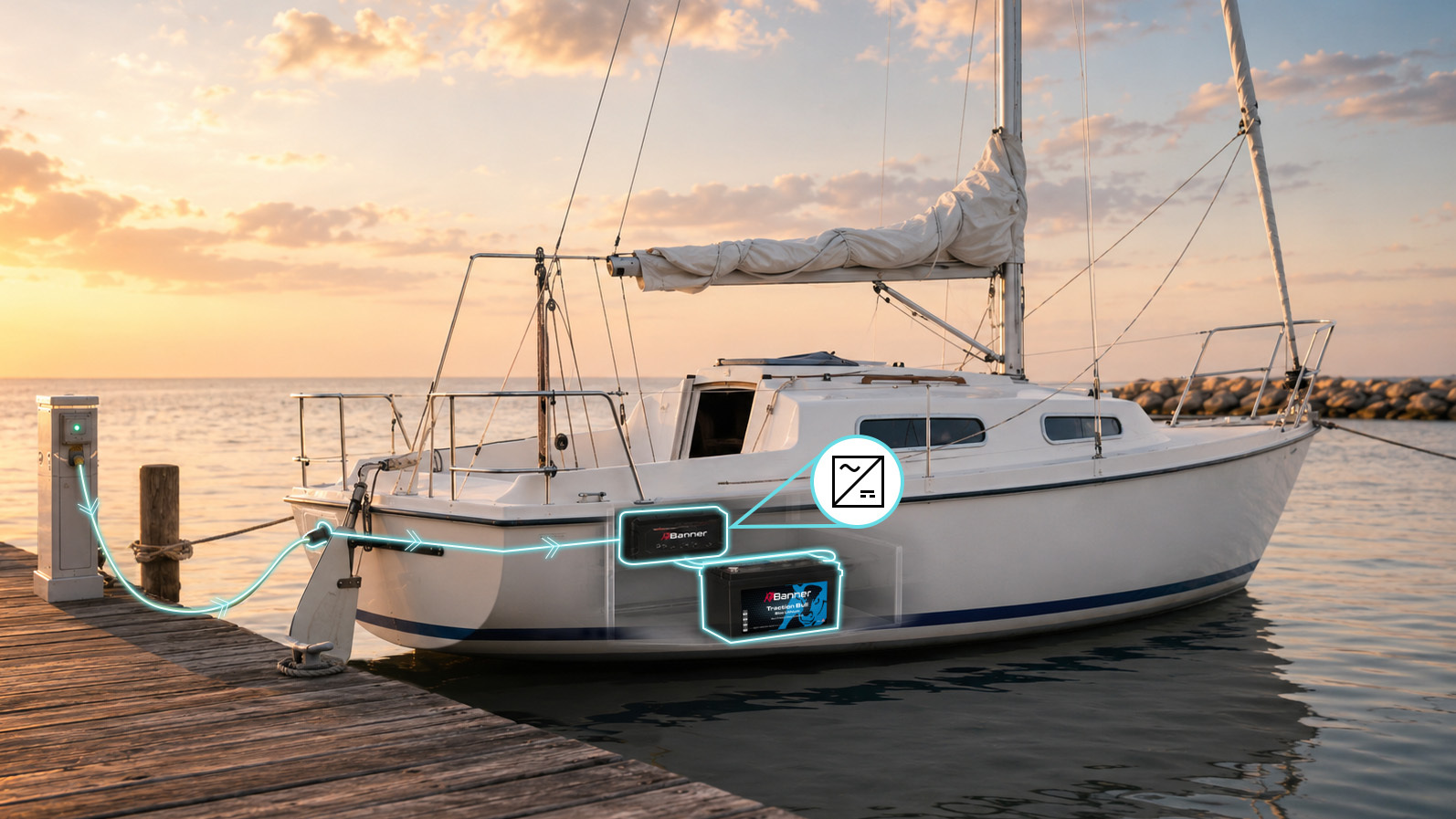
Charge conveniently and reliably in the harbour using the 230 V mains power charger.
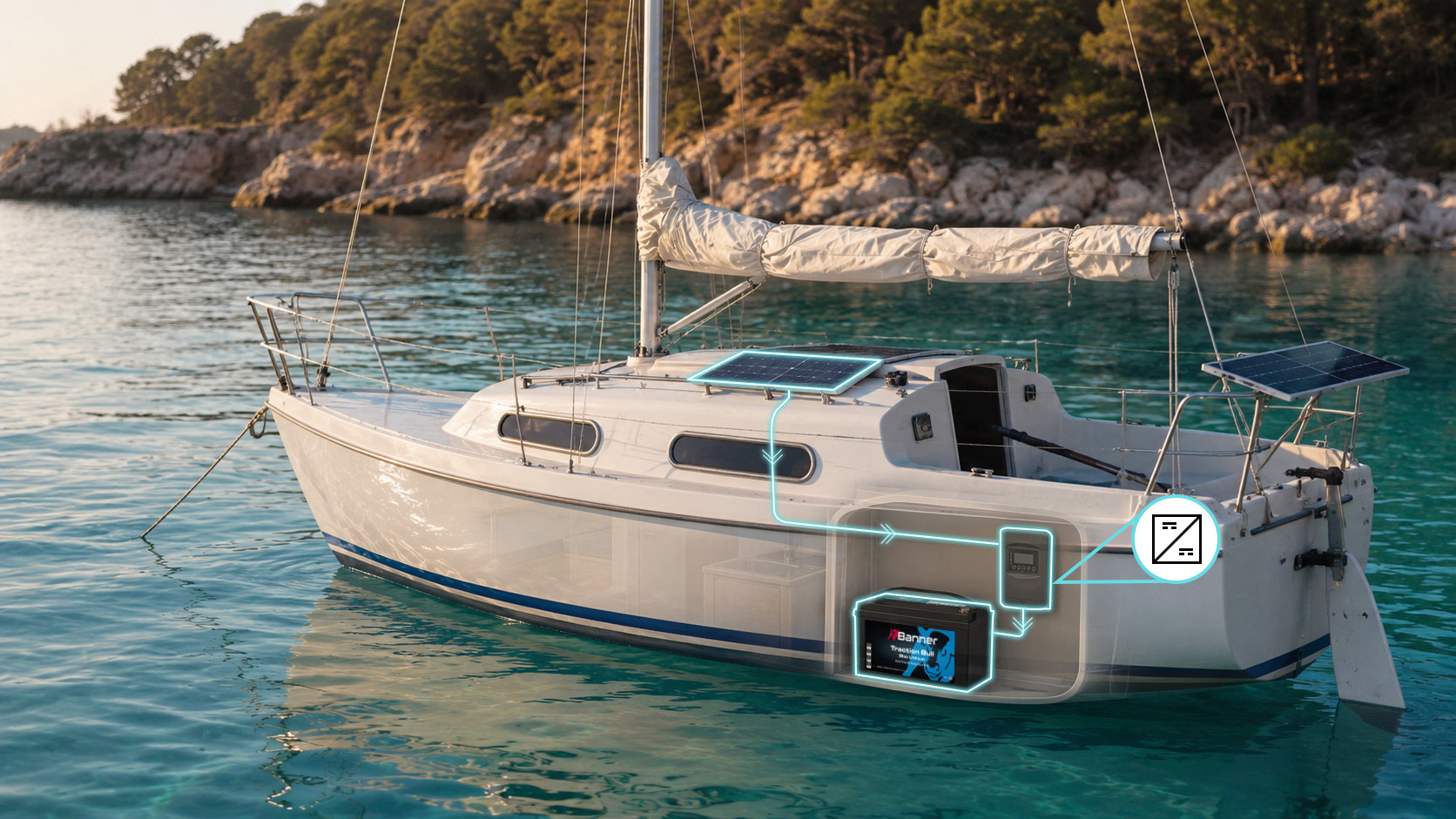
MPPT* solar controllers provide additional energy generation on board.
*Maximum Power Point Tracking (MPPT)
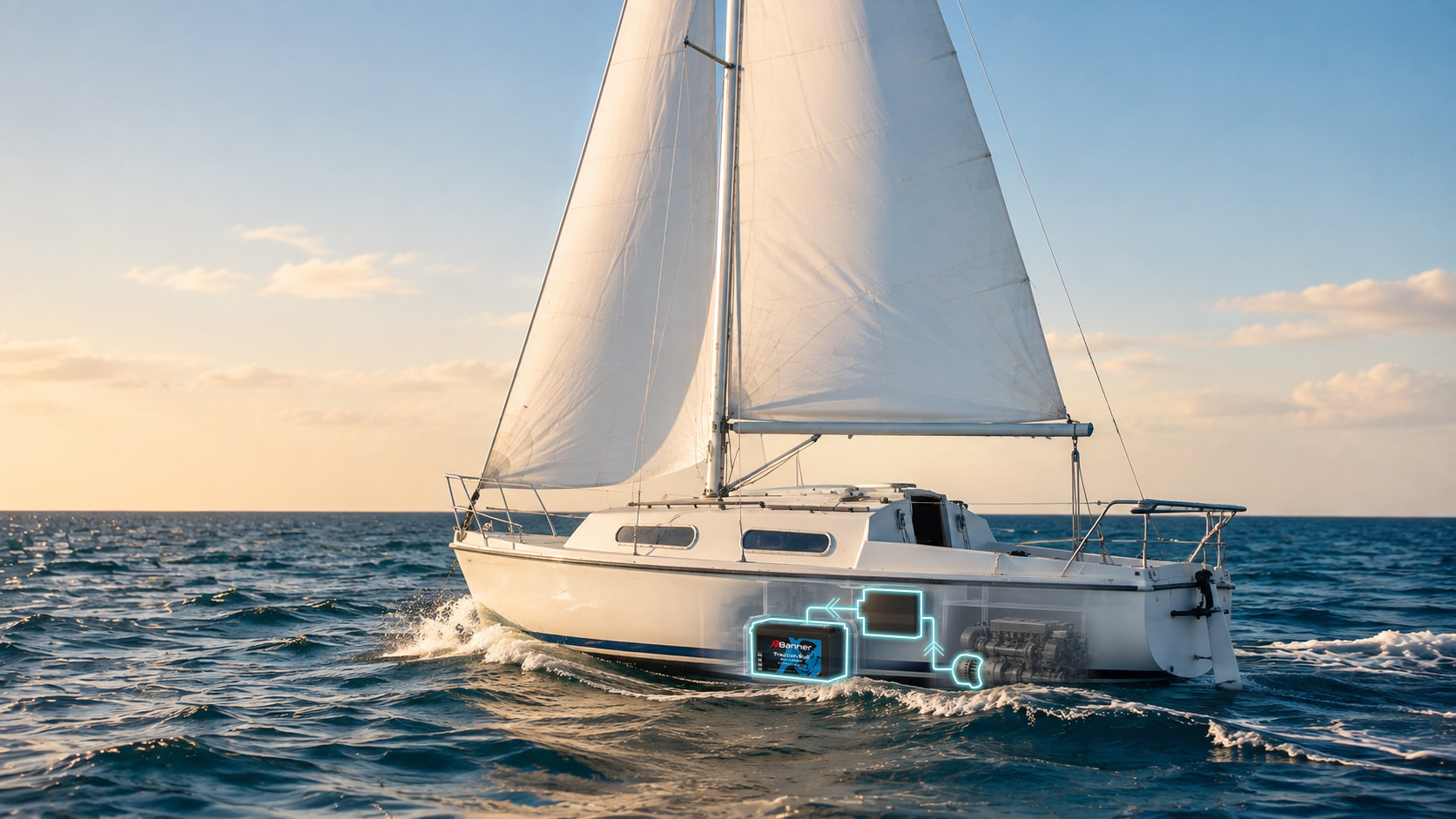
A lithium-compatible DC/DC charging booster efficiently uses the energy from the alternator.
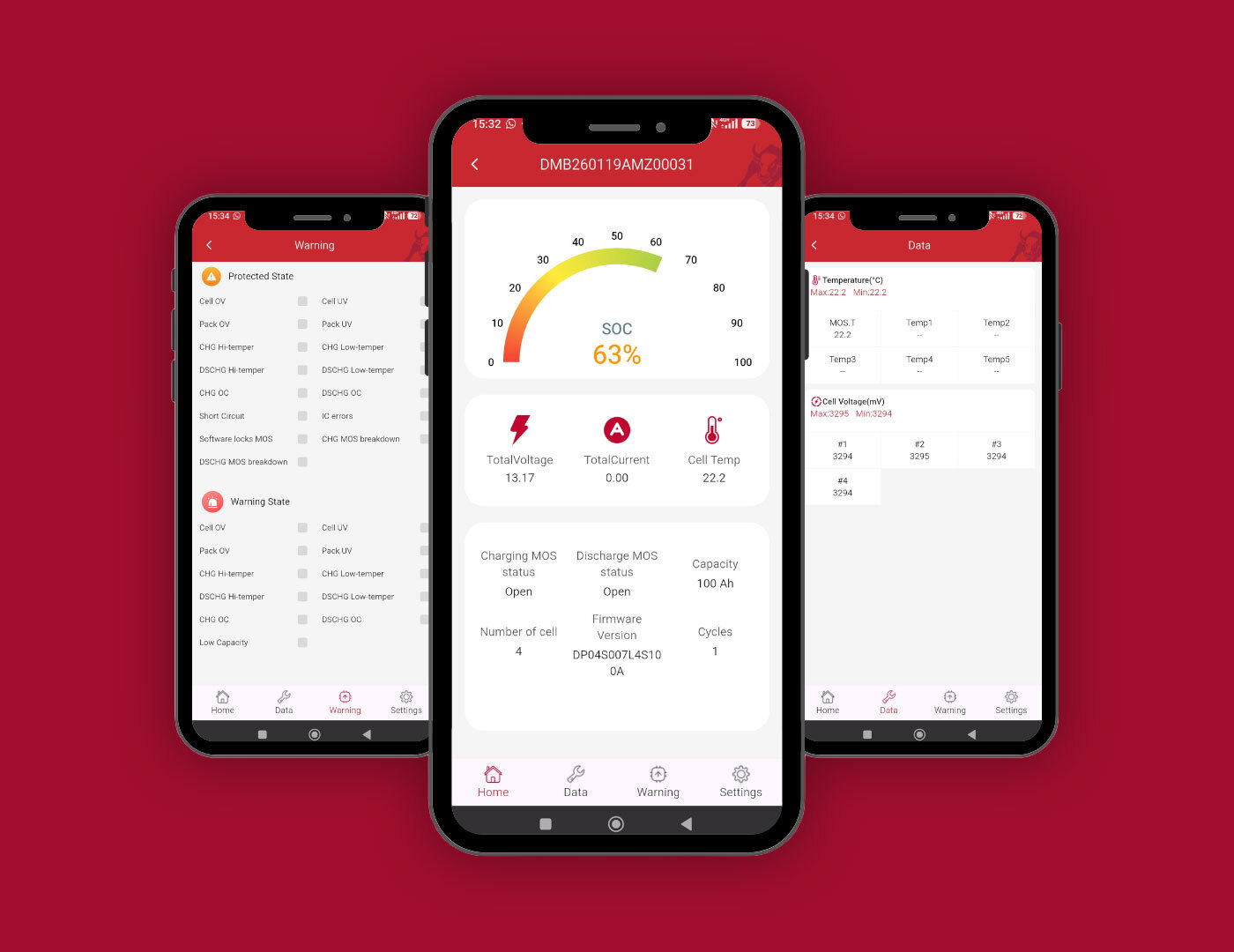
Battery Management System (BMS)
Full control via the app, the integrated Battery Management System continuously monitors what matters: state of charge, voltage, temperature, individual cell voltages and protection functions in the event of overvoltage or undervoltage. Via Bluetooth, the free Banner app (Google Play, App Store) retrieves these values in real time. The data remains between the battery and smartphone – hosted in Austria, without any user data being requested. You can rely on that too.
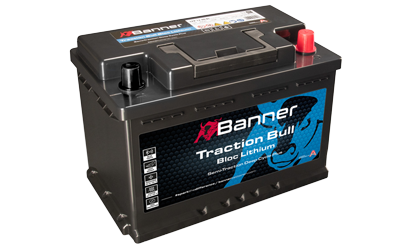
Technical data:
Type: LFP 12-50 BL
Order number: 04054LFP80
EAN/GTIN: 900753101883
Nominal voltage: 12.8 V
Capacity (K5): 80 Ah
Watt-hours: 1,024 Wh
Max. charge and discharge current: 80 A
Circuit: 0
Terminal configuration: 1
Length: 279 mm
Width: 175 mm
Case height: 189 mm
Overall height: 189 mm
Bluetooth: Yes
BMS: Yes
Heating function: Yes
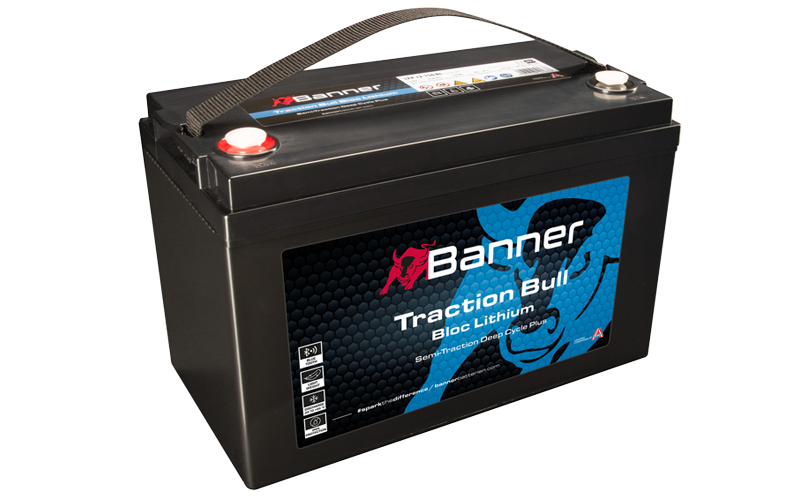
Technical data:
Type: LFP 12-150 BL
Order number: 04054LFP150
EAN/GTIN: 900753101876
Nominal voltage: 12.8 V
Capacity (K5): 150 Ah
Watt-hours: 1,920 Wh
Max. charge and discharge current: 150 A
Circuit: 1
Terminal configuration: M8
Length: 330 mm
Width: 171 mm
Case height: 215 mm
Overall height: 220 mm
Bluetooth: Yes
BMS: Yes
Heating function: No
Frequently Asked Questions (FAQ)
Which battery is right for my boat?
Which battery is right for my boat?
The right battery depends on the application. For on-board power supply – such as refrigerators, lighting, navigation, pumps or entertainment electronics – LiFePO4 batteries offer significant advantages in terms of runtime, weight and service life. We developed our Traction Bull Bloc Lithium series specifically for power supply and leisure applications. We will be happy to help you select the right capacity for your boat and usage profile.
How can I prevent a power failure while sailing?
How can I prevent a power failure while sailing?
A correctly sized battery is the basis for a reliable power supply on board. Take into account the operating times of your electrical consumers, the battery capacity and the available charging sources – alternator, shore power, solar. LiFePO4 batteries also provide stable voltage and high usable capacity for maximum security of supply.
What happens if several electrical consumers are running at the same time?
What happens if several electrical consumers are running at the same time?
LiFePO4 batteries reliably deliver high currents, even when several electrical consumers are operating simultaneously. Whether it is a refrigerator, lighting, chartplotter, anchor windlass or inverter: the key is to correctly configure the battery system for your actual energy requirements.
Can I replace my AGM or gel battery with lithium?
Can I replace my AGM or gel battery with lithium?
In many cases, yes. Before replacing it, check whether the charger, alternator, charging booster and solar system are compatible. A professional system check ensures that you can take full advantage of the benefits of lithium technology.
How do I charge my lithium battery correctly on board?
How do I charge my lithium battery correctly on board?
You can charge it using mains power, solar systems or suitable charging equipment while sailing. For optimum performance and service life, we recommend chargers with a lithium charging profile.
What should I consider during longer periods of inactivity or winter storage?
What should I consider during longer periods of inactivity or winter storage?
Fully charge the battery before longer periods of inactivity and then store it in a cool, dry and frost-free location. For a long service life, a state of charge of around 30–80% is recommended for longer storage periods. Check the battery regularly and recharge it if necessary.
How do I get my boat ready for the season?
How do I get my boat ready for the season?
Before the start of the season, check the batteries, chargers, fuses and electrical connections. We also recommend checking the voltage as well as all electrical consumers and charging sources. This helps you avoid surprises when either launching your boat or during the season.
Is lithium worth the extra cost?
Is lithium worth the extra cost?
For many boating applications, yes. LiFePO4 batteries offer significantly more usable capacity, shorter charging times, less weight and a considerably longer service life than comparable AGM or gel batteries. Over the entire service life, this often results in lower total costs.
How much weight can I save with lithium?
How much weight can I save with lithium?
Depending on the capacity, a LiFePO4 battery weighs only around one third as much as a comparable AGM battery. Especially on sailing boats and motorboats, this has a positive effect on handling, payload and fuel efficiency.
How long does a lithium battery last on a boat?
How long does a lithium battery last on a boat?
LiFePO4 batteries achieve at least 5,000 charge and discharge cycles at 50 % depth of discharge – seven times that of a comparable AGM battery. Even with intensive seasonal use, it therefore lasts significantly longer than a conventional lead-acid battery.