





Which lithium battery is right for my boat?
Calculate the required capacity instead of guessing.


How much battery capacity a boat needs depends on the power consumption on board. Choosing the capacity based on guesswork can mean either spending too much on the initial purchase or running out of power after two days without direct power.A better approach is to list every electrical load on board, note its wattage and estimate how many hours it runs each day.
As a rough guide, here are three starting points when purchasing a new lithium battery:
100 Ah (1,280 Wh): covers lighting, water pumps, phone charging and a compressor refrigerator with light to moderate use. Usually sufficient for 2 to 3 days without recharging.
150 to 200 Ah (1,920 to 2,560 Wh): the right choice when occasional higher loads are added, such as a coffee machine or hair dryer operated via an inverter. Or if you plan to spend longer periods away from the marina.
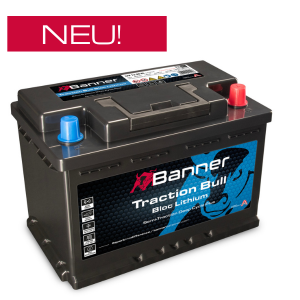
300 Ah and more (3,840 Wh and more): for offshore trips with high daily energy requirements, for example by connecting two Traction Bull Bloc Lithium 12-150 BL batteries in parallel.
The LiFePO4-based Traction Bull Bloc Lithium range covers this spectrum with five models from 50 to 150 Ah, all with a nominal voltage of 12.8 V and Bluetooth monitoring. The 12-80 BL and 12-100 BL models also feature integrated heating, enabling safe charging even in cold conditions. All models can be connected in series or in parallel, allowing the same batteries to be configured as a 12 V, 24 V or 48 V battery bank for larger boats.
Banner tip
When sizing an inverter for 230 V devices such as kettles or coffee machines, it is best to add 15 percent to the device’s rated power. This accounts for the energy lost when converting from 12 V DC to 230 V AC.
By calculating the required capacity correctly, you can be confident that you are on the safe side on board when switching to modern lithium technology.