





Lead-acid, AGM or lithium: Which battery is best for motorhomes and caravans?
Two vehicles, two answers.


Motorhomes and caravans place different demands on the on-board battery. With motorhomes, every kilo counts up to the 3.5-tonne limit. With caravans, mains electricity is usually available at campsites. Anyone looking for the right battery should therefore not only consider their own vehicle, but also understand the technical differences between lead-acid, AGM and lithium batteries.
The most obvious difference is usable capacity. To ensure a long service life, lead-acid and AGM batteries should generally not be discharged beyond 50 per cent; only half of the rated capacity is available for everyday use. A lithium battery can be discharged much further before the built-in battery management system intervenes. A 100 Ah lithium battery therefore delivers almost twice as much usable energy as a 100 Ah AGM battery – whilst taking up the same amount of space.
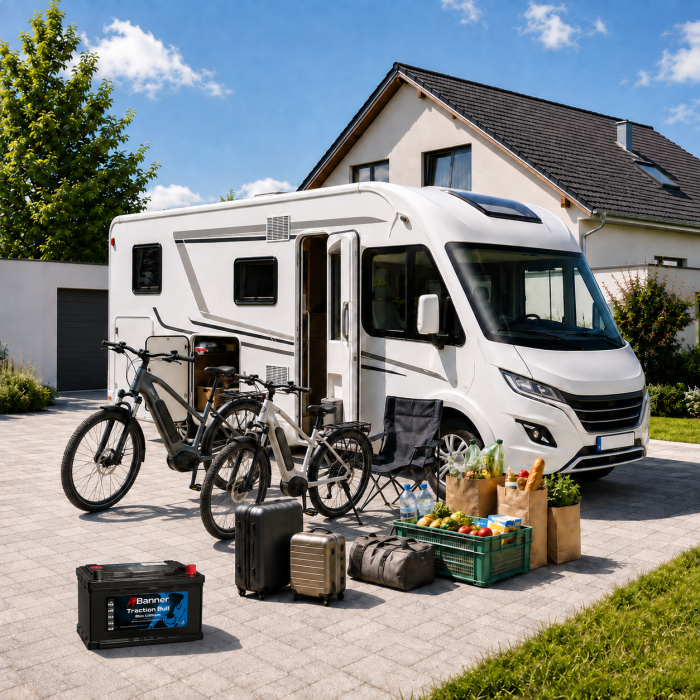
Motorhomes: When weight sets the limit
With motorhomes, the maximum authorised weight is quickly reached. A lithium battery provides the same or greater usable capacity as a lead-acid battery, whilst weighing significantly less. Every kilo saved creates a reserve – for a greater payload, longer self-sufficiency without mains power, or simply more luggage. For motorhomes that regularly reach their weight limit, this is often the decisive factor in making the switch.
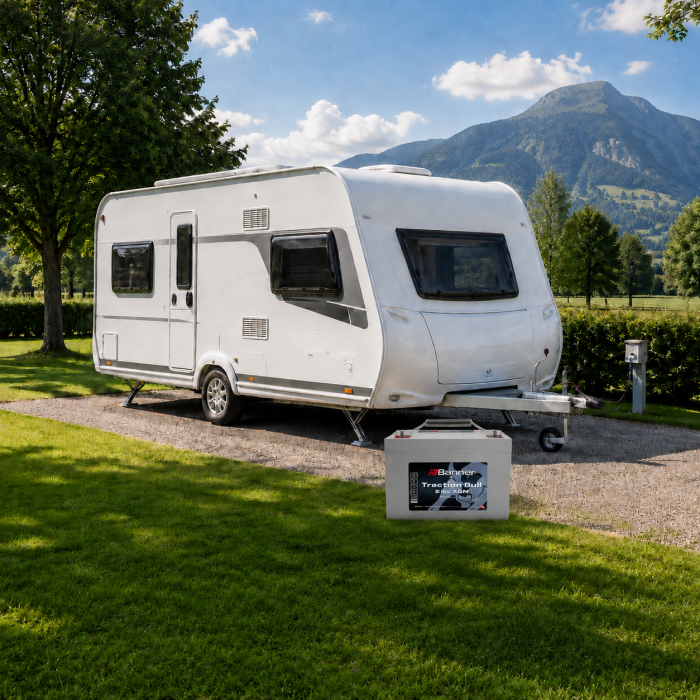
Caravans: When mains power is the norm
With a traditional caravan, the situation is different. With no engine of their own and usually connected to the campsite’s mains power supply, an AGM battery is generally sufficient. It is robust, maintenance-free and cheaper to buy. Lithium is particularly worthwhile here if the caravan’s payload or the towing vehicle’s towing capacity is running low. In that case, every kilo saved counts just as much as it does with a motorhome, just for a different reason.
Banner Tip
Anyone switching to lithium should also check their charging system. The charger, solar controller and the towing vehicle’s alternator must provide a suitable charging profile, otherwise, the battery will not charge reliably. Read more in the article ‘On the road: Charging the on-board battery safely via the alternator’.
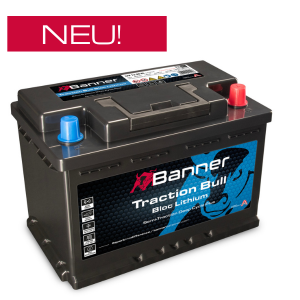
You can see which technology is best suited to your needs by looking at your own vehicle. If you’re usually connected to the mains, lead-acid or AGM technology will serve you well. If, on the other hand, you regularly reach the weight limit or want to travel independently for longer periods, you’ll be on the safe side with lithium batteries – such as those from the Traction Bull Bloc range.