









Converting to lithium: What you need to consider
Why the alternator cannot simply keep up.


Converting a boat battery to lithium is quickly done. However, the charging system is often overlooked – and that is exactly where problems can arise.Before converting, three components need to be checked: the shore power charger, the solar charge controller and the alternator.
Shore power chargers and high-quality MPPT solar charge controllers now usually come with a lithium charging profile as standard. If the charger on board is more than around five years old, it is worth checking the data sheet.The real challenge lies elsewhere.
Alternators on board were originally designed for automotive applications: they recharge a starter battery and are not designed to operate at full output for extended periods.
With a lead-acid battery, the charging current decreases automatically as the battery becomes more fully charged. A lithium battery, by contrast, has very low internal resistance and draws as much current as the alternator can supply for a significantly longer period.If the alternator is not designed for this, heat builds up and its output decreases, or the alternator may suffer premature damage.
Three ways to solve this:
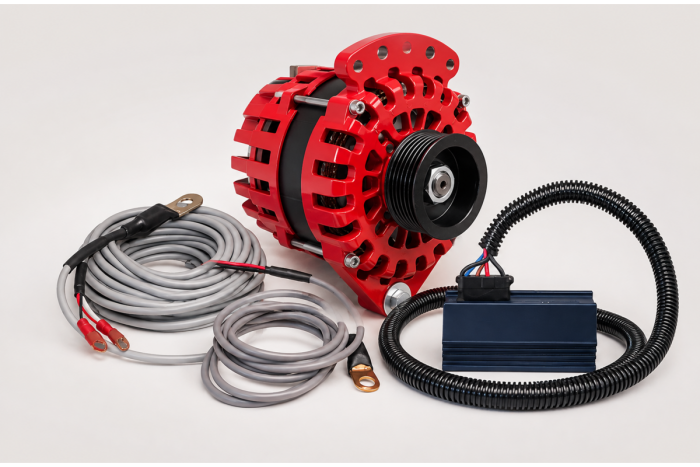
Install a marine-grade alternator: designed for continuous high-current output, ideally with temperature monitoring that automatically reduces output before overheating occurs.
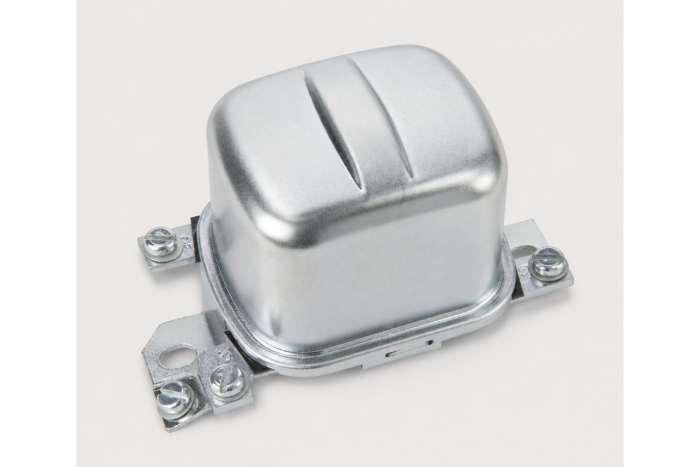
Add an external alternator regulator: directly controls the field current and temperature, allowing a standard alternator to operate without overheating. This is a middle-ground solution in terms of effort and cost.

Add a DC-DC charger: installed between the starter battery and the lithium battery bank, the alternator charges the starter battery as usual, while the DC-DC charger supplies the lithium batteries with controlled current. This protects the alternator while providing the lithium battery bank with the charging profile it requires.
Banner tip
A standard lead-acid battery charger does not charge a lithium battery correctly because the charging settings are not suitable. Make sure to use a charger with a LiFePO4 charging profile that switches off at around 14.4 V.
A successful conversion to lithium is not just a question of technology; it is also important to consider the entire charging system.Taking this step protects the alternator and provides a reliable onboard power supply.